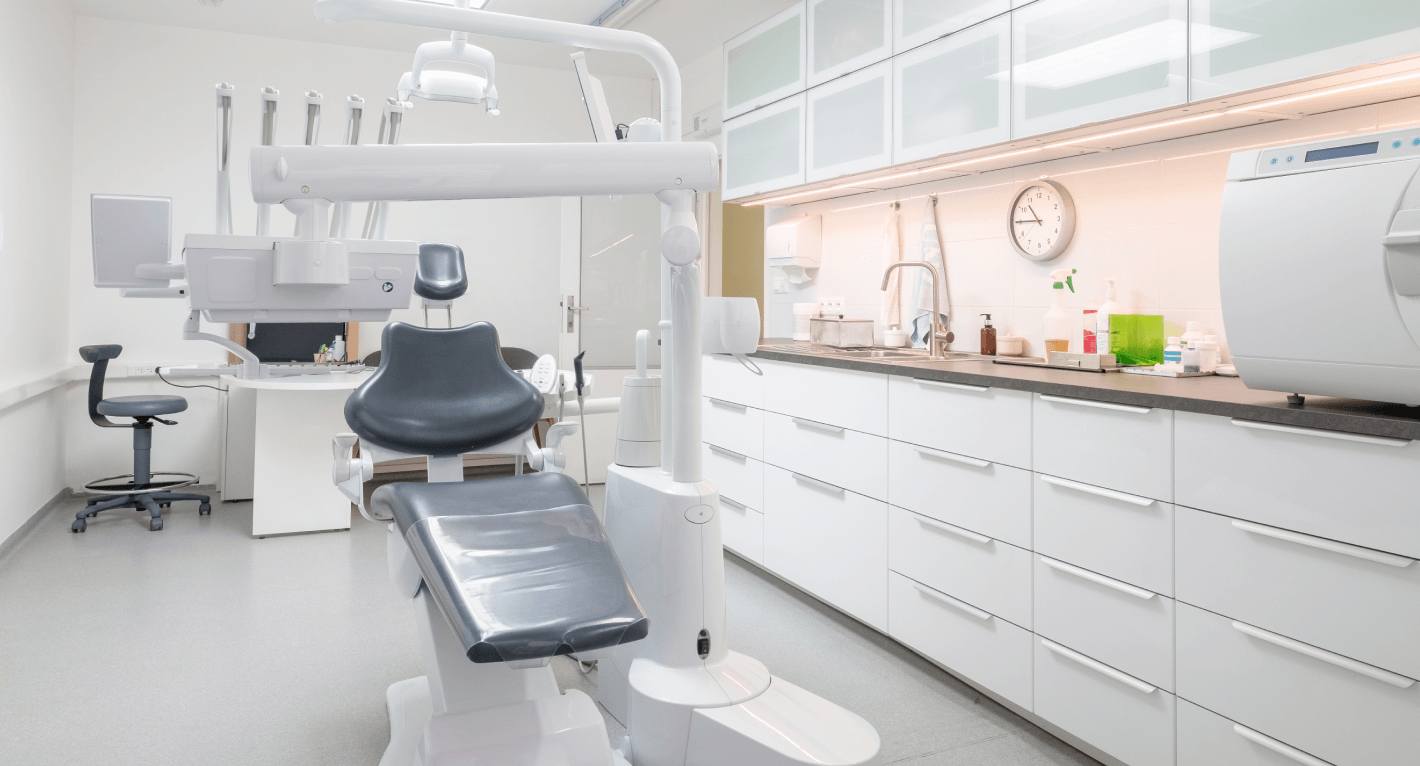
DOCS offers a variety of tests to ensure that the right decision is made for our patients’ well-being. Patients receiving dental treatments often undergo radiology and lab scans.
Dental radiology and lab technology take digital impressions and images, giving dentists a closer view of a patient’s mouth, including teeth and gums. These tests and scans help the dental staff determine the best next steps in a patient’s treatment plan.
Checkout Our Laser Therapy Services
WHAT WE DO
Our Radiology and Lab Services in Ottawa
Cone beam 3D imaging systems render a high definition image of the face and jaw, in three dimensions. This innovative technology is especially useful in planning the location of implants, detecting infections or tumors, and diagnosing Temporomandibular Joint Disorder (TMD). Using cone beam imaging technology significantly reduces the exposure to radiation in comparison to a medical CT, along with the added benefits of a quicker visit and a more comfortable imaging session.
Digital radiographing allows for the images of your teeth to be directly transferred into a computer for enhanced viewing, and flexibility of use. Along with these two important factors, is the added benefit of reduced exposure to radiation from digital radiographs, which can be as high as a 90% reduction.
An intraoral camera is a small camera that can be placed in your mouth to take photos that are transmitted directly to a monitor. It allows both the patient and the doctor to get an accurate depiction of the patient’s oral health. Given the level of detail provided, the use of an intraoral camera can result in a more accurate diagnosis.
With the advent of digital impressions, traditional goopy impressions can be a thing of the past in most cases. Digital impressions are taken with a wand that follows the contours of the teeth and gums, transferring data through a fiber optic cable to an operating station with special software, that then produces a rendering of your teeth. This rendering can consequently be used to make computer assisted design and manufactured crowns, abutments and surgical guides. A recent added benefit is the ability to do tissue comparison scans that allow for more accurate monitoring of gum recession over time.